
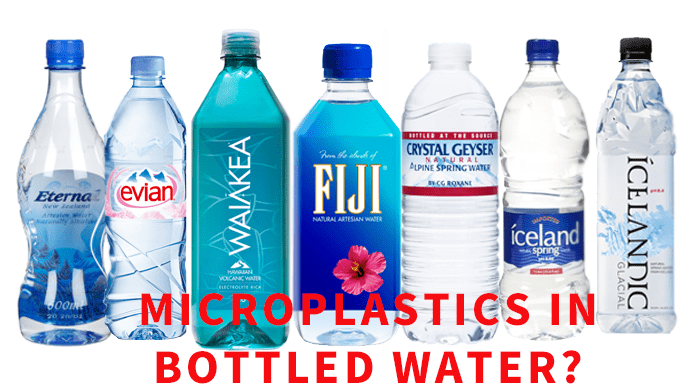
Microplastics in Bottled Water: A Clearer Understanding
People are concerned about microplastics in bottled water, and that concern is valid. The bigger issue, though, is not one water brand. The bigger issue is the amount of plastic pollution moving through our environment, our water systems, and our food supply.
Some people sensationalize the issue. They make it sound as if one bottled water brand is clean while another brand is dangerous. That misses the larger point. Microplastics are now widespread, and plastic packaging can add more particles to bottled water.
What the Studies Show
There is no evidence that water bottling companies are intentionally adding microplastics to their water. The real question is how microplastics are getting into the water.
A 2018 study, Synthetic Polymer Contamination in Bottled Water, tested 259 bottles across 11 brands and found signs of microplastic contamination in 93% of the bottles tested. The study also found that bottled water generally contained more plastic particles than tap water.
Tap water contained mostly microplastic fibers. That points to environmental pollution as a major source. These fibers can come from clothing, tires, paint, plastic waste, microbeads, and other plastic materials that break down and move through the air, soil, rivers, lakes, and oceans.
Bottled Water and Plastic Packaging
Bottled water had a different pattern. The study found more fragments and smaller plastic particles in bottled water, which suggests that some of the contamination came from bottling, processing, and packaging.
Polypropylene was the most common polymer found in the study. Since polypropylene is commonly used to make plastic bottle caps, the cap and packaging are likely contributors. The study also found that a small percentage of particles showed signs of industrial lubricants, which points toward the bottling process as another possible source.
That does not mean bottled water companies are secretly adding plastic to the water. It means the packaging and processing system itself can introduce plastic particles.
Newer Testing Finds Smaller Particles
A 2024 study, Rapid Single-Particle Chemical Imaging of Nanoplastics by SRS Microscopy, used newer testing methods that can detect much smaller plastic particles. Researchers found about 240,000 plastic particles per liter on average in three popular bottled water brands, and about 90% of those particles were nanoplastics.
This does not simply mean earlier studies were wrong. It means earlier testing could not see many of the smaller particles. As testing improves, researchers are finding more microplastics and nanoplastics than older methods could detect.
This Is Not Just One Brand
The problem is not that one bottled water brand contains microplastics while another brand is completely clean. The issue appears to be much broader. Plastic pollution is already in the environment, and bottled water can pick up additional particles from plastic packaging, caps, filters, and processing.
That is why switching from one plastic bottled water brand to another does not fully solve the problem. The deeper issue is our dependence on plastic packaging.
Lawsuits Over “Natural” Bottled Water
Some bottled water companies have faced lawsuits over the use of words like “natural” on their labels. These lawsuits are not claiming that companies are intentionally adding microplastics to the water. The argument is that water packaged in plastic and containing plastic particles should not be marketed in a way that makes consumers think it is completely natural or untouched.
Whether those claims succeed depends on the court, the exact label language, and the evidence in each case. The larger point remains: the word “natural” can become complicated when the product is sold in plastic packaging.
What Does This Mean for Me?
Microplastics in the environment are a real concern whether they are found in tap water or bottled water. At the same time, drinking enough clean water is essential for health.
The choice between tap water and bottled water is not always simple. Many people avoid tap water because of fluoride, chlorine, old pipes, PFAS, lead, or other man-made chemicals. Others avoid bottled water because of plastic packaging and microplastic exposure.
The best choice depends on your water source, your budget, and your ability to filter your water properly. Glass-bottled water would reduce contact with plastic packaging, but it is often more expensive, heavier, and harder to manage. A good home filtration system can be a better long-term option for many people, depending on the quality of the local water supply.
For now, the main lesson is not to panic over one water brand. The issue is bigger than that. Microplastics are part of a much larger plastic pollution problem.
Bottled water companies are not intentionally adding microplastics to water. The concern is that plastic packaging, caps, processing, and environmental pollution can all contribute to microplastic and nanoplastic contamination.
So the real conversation should not be built around conspiracy theories. It should be built around reducing plastic exposure, improving water quality, and finding better ways to package and deliver drinking water.
Related Links:
Make a Raised Plant Bed Using Stone Block
Getting Coconuts From Coconut Trees at My Home Kenya
Animated Video: An Alkaline Plant Based Diet Heals
Dr. Sebi Nutritional Guide
Alkaline Herbal Medicine Book
Alkaline Plant Based Diet Book