
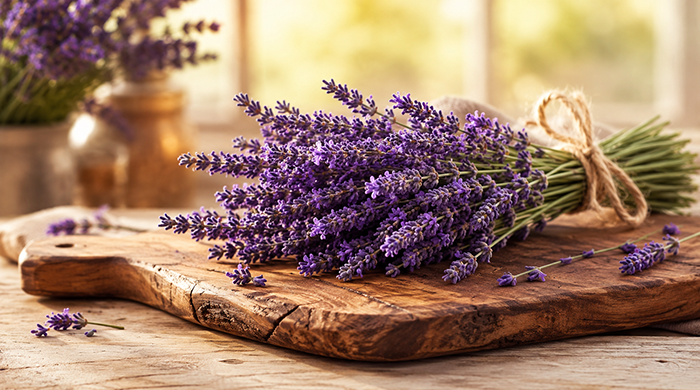
Lavender is one of the most well-known calming herbs. Its soft floral aroma has been used for relaxation, rest, emotional balance, and natural comfort during times of stress.
For headaches and migraines, lavender is most often used through aroma, diluted topical use, or tea. It is not a magic cure, and it can be a gentle support when the body is tense, overstimulated, tired, or under stress.
Lavender works best as part of a full body-supporting lifestyle: rest, hydration, mineral-rich plant foods, clean air, quiet, and reduced stress on the nervous system.
Why Lavender Is Used for Headaches
Many headaches are connected to tension, stress, poor sleep, dehydration, bright light, strong smells, and nervous system overload. Migraine attacks can also be triggered by changes in sleep, hormones, weather, food patterns, and other personal triggers.
Lavender is useful because it gives the body a calming signal. Its aroma can help create a more relaxed internal environment, which may support people who experience stress-related headaches or migraine patterns.
The goal is not to force the body into relief. The goal is to remove irritation, calm the senses, and give the body better conditions to settle.
Lavender and Migraine Research
One clinical study looked at lavender essential oil for migraine headaches. In the study, people with migraine inhaled lavender essential oil for 15 minutes at the early stage of a migraine attack.
The lavender group had better improvement than the placebo group. Headache severity and symptoms such as nausea, sensitivity to light, sound, and smell improved more often in the lavender group.
This is encouraging research, especially because lavender is simple, natural, and easy to use carefully.
How Lavender May Support Headache Relief
Lavender contains aromatic compounds, including linalool and linalyl acetate. These compounds help give lavender its calming smell and are part of why lavender is commonly used for relaxation and nervous system support.
Lavender may support headache comfort by helping the body:
- Relax tension
- Settle stress response
- Support deeper rest
- Calm sensory overload
- Create a peaceful environment during a headache or migraine
This is why lavender is often used in a quiet room, with dim light, slow breathing, and reduced noise.
Lavender Compared to Prescription Drugs
- 74% of the participants found migraine relief using lavender.
- 70% of people who received sumatriptan injections in hospitals found relief.[2]
- 59% of prescribed sumatriptan headache medication users found relief.[3]
- 57% of Ibuprofen user found relief.[4]
- 52% of high dose Tylenol users found relief.[5]
How Does Lavender Treat Migraine Headaches?
Lavender contains a compound called linalool which is analgesic (reduces pain) and anti-inflammatory, and is believed to reduce inflammation in blood vessels that leads to migraines.
How to Use Lavender for Headaches
Lavender Inhalation
A simple way to use lavender is through inhalation. Add 1 drop of lavender essential oil to a tissue, cotton pad, or diffuser and breathe gently.
The migraine study used 2–3 drops near the upper lip, inhaled for 15 minutes. For regular home use, start more gently. Essential oils are concentrated, and more is not always better.
Keep lavender oil away from the eyes. Stop using it if the smell worsens your headache, irritates your breathing, or makes you feel uncomfortable.
Diluted Temple Rub
Some people apply diluted lavender oil to the temples, neck, or shoulders. Always dilute essential oil in a carrier oil before putting it on the skin.
A simple dilution is 1 drop of lavender essential oil mixed into 1 teaspoon of carrier oil. Rub a small amount onto the temples or tight areas, staying away from the eyes.
Do a small skin test first. Some people react to lavender oil with itching, redness, or irritation.
Lavender Tea
Lavender tea is another gentle option. Use food-grade dried lavender flowers, not essential oil. Essential oils should not be swallowed.
Lavender tea is slower and softer than aromatherapy. It may be most useful in the evening, during periods of stress, or as part of a calming routine that supports sleep and relaxation.
Sources:
[1] P. Sasannejad, M. Saeedi, A. Shoeibi, A. Gorji, M. Abbasi, M. Foroughipour. Lavender essential oil in the treatment of migraine headache: A placebo-controlled clinical trial. Eur. Neurol. 2012 67(5):288 – 291
[2] D. Magis, J. Schoenen. Treatment of migraine: Update on new therapies. Curr. Opin. Neurol. 2011 24(3):203 – 210
[3] M. D. Ferrari, P. J. Goadsby, K. I. Roon, R. B. Lipton. Triptans (serotonin, 5-HT1B/1D agonists) in migraine: Detailed results and methods of a meta-analysis of 53 trials. Cephalalgia 2002 22(8):633 – 658
[4]R. Rabbie, S. Derry, R. A. Moore, H. J. McQuay. Ibuprofen with or without an antiemetic for acute migraine headaches in adults. Cochrane Database of Systematic 2010 10:1-68
[5] M. J. Prior, J. R. Codispoti, M. Fu. A randomized, placebo-controlled trial of acetaminophen for treatment of migraine headache. Headache 2010 50(5):819 – 833
[6] Effects of Coriandrum sativum Syrup on Migraine: A Randomized, Triple-Blind, Placebo-Controlled Trial