
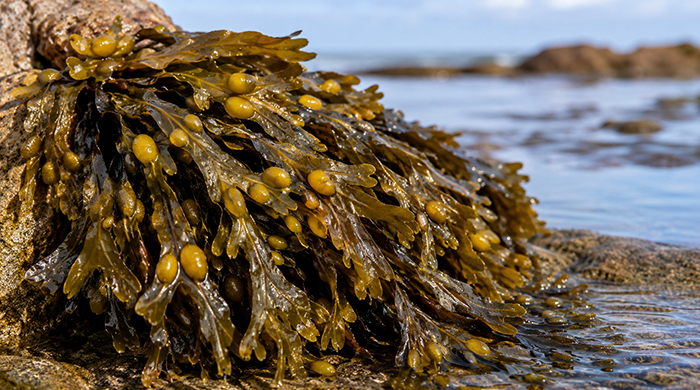
Bladderwrack is a brown seaweed traditionally used for nourishment, cleansing, and mineral support. Its botanical name is Fucus vesiculosus, and it grows along rocky ocean coastlines where it absorbs minerals from seawater.
Bladderwrack is best known for its natural iodine content. Iodine is an essential mineral the body uses to make thyroid hormones, which help regulate metabolism, energy use, growth, and many important body functions. This is why bladderwrack has a long history of use in traditional herbal systems connected to thyroid support.
Bladderwrack also contains alginic acid, fucoidan, antioxidants, and minerals that make it one of the most important sea herbs used in natural wellness traditions.
Bladderwrack at a Glance
Botanical name: Fucus vesiculosus
Common names: bladderwrack, sea wrack, brown seaweed, brown kelp seaweed
Plant type: brown seaweed
Main natural compounds: iodine, alginic acid, fucoidan, minerals, polyphenols
Traditionally used for: thyroid nourishment, mineral support, digestion, cleansing, skin support, and overall balance
Main caution: iodine sensitivity, thyroid disorders, pregnancy, breastfeeding, medication interactions, and heavy metal contamination
What Is Bladderwrack?
Bladderwrack is a brown algae that grows in cold coastal waters. It gets its name from the small air-filled “bladders” along its fronds. These bladders help the seaweed float and stay close to sunlight in shallow ocean water.
Because bladderwrack grows in mineral-rich seawater, it naturally contains iodine and other minerals. This is one reason it became valued in traditional herbal medicine. It was dried and used as an herb to support cleansing, nourishment, and homeostasis.
Homeostasis means the body’s ability to maintain internal balance. In alkaline plant-based living, herbs are not viewed as magic bullets. They are part of a larger way of living that supports the body through clean food, mineral nourishment, hydration, elimination, movement, rest, and spiritual alignment.
Bladderwrack’s Major Components
Bladderwrack contains many natural compounds, and three of the most important are iodine, alginic acid, and fucoidan.
Iodine and Thyroid Support
Iodine is one of bladderwrack’s most important minerals. The thyroid gland uses iodine to produce thyroid hormones. These hormones help regulate metabolism, energy production, temperature balance, and many other functions in the body.
Because bladderwrack is rich in iodine, it has traditionally been used to support thyroid function when low iodine intake is involved.
Alginic Acid and Digestive Support
Bladderwrack contains alginic acid, a natural polysaccharide found in brown seaweeds. When alginic acid binds with minerals such as sodium or calcium, it forms alginates.
Alginates are known for their gel-forming quality. This gives them a soothing, coating action. In natural wellness traditions, this mucilage-like quality is one reason bladderwrack has been used to support the digestive tract and mucus membranes.
Alginates are also used in wound dressings because they help create a moist environment that supports the body’s natural healing process. It shows that compounds from brown seaweed have useful properties that are valued in both traditional and modern applications.
Fucoidan and Immune Support
Fucoidan is a sulfated polysaccharide found in brown seaweeds such as bladderwrack. It has been studied for antioxidant, immune-modulating, inflammatory-response, and cell-protective activity.
Traditional Uses of Bladderwrack
Bladderwrack has been traditionally used for:
- mineral nourishment
- thyroid support connected to iodine deficiency
- digestive support
- fluid balance
- skin support
- cleansing support
- overall homeostasis
In Dr. Sebi’s methodology, sea plants and herbs are valued because they support the body’s natural cleansing and mineral balance. Bladderwrack fits into that larger view because it comes from the ocean, carries minerals, and offers natural compounds that support the body’s internal environment.
Bladderwrack, Minerals, and the Alkaline Plant-Based Lifestyle
A major goal of alkaline plant-based living is to support the body with foods and herbs that are mineral-rich, plant-based, and aligned with natural function.
Bladderwrack brings the mineral intelligence of the ocean. It is different from leafy greens, roots, fruits, and land herbs because it grows in seawater and absorbs minerals from that environment.
Final Thoughts
Bladderwrack is one of the most important sea herbs in traditional herbal education. It is rich in iodine, minerals, alginic acid, fucoidan, and other natural compounds that support its long history of use.
Its greatest value is also the reason it should be used wisely. Bladderwrack can support mineral nourishment and thyroid-related wellness when used appropriately.
In an alkaline plant-based lifestyle, bladderwrack belongs in the larger picture of cleansing, nourishment, balance, and respect for the body’s natural design.
To learn more about bladderwrack and other herbs used in Dr. Sebi’s methodology, read Alkaline Herbal Medicine. The book explains how these herbs fit into a larger alkaline plant-based approach to cleansing, nourishment, and maintaining balance in the body.
Sources
Memorial Sloan Kettering Cancer Center, “Bladder Wrack.”
NIH Office of Dietary Supplements, “Iodine Fact Sheet for Health Professionals.”
European Medicines Agency, “Assessment Report on Fucus vesiculosus L., Thallus.”
European Medicines Agency, “Addendum to Assessment Report on Fucus vesiculosus L., Thallus.”
Aderibigbe and Buyana, “Alginate in Wound Dressings.”
Cleveland Clinic, “Alginates for GERD.”